Únete y Recibe Nuestras Publicaciones Por Correo (GRATIS)

Escribe tu dirección de correo:

Verifica en el correo no deseado.

FACEBOOK

Mostrando las entradas con la etiqueta Social Sciences. Mostrar todas las entradas

DOWNLOAD BOOK

Big Ideas About Feudal Europe
Culture Many societies rely on family roles and social
classes to keep order.
After the fall of Rome, a political and social system called
feudalism developed in Europe. Feudal society was divided
into well-defined classes. At the top were kings and wealthy
landowners. At the bottom were peasants, many of whom
worked for the landowners.

Eng Book- Feudal Europe- Download Free PDF


DOWNLOAD BOOK

FOCUS q U e S t i O n S
1 What role did the pharaoh play in Ramesside
society?
2 How was society structured and what were the
functions of individuals and social groups?
3 What factors contributed to economic
prosperity and decline?
4 What were the characteristic features of work
and leisure for Egyptians of all classes?
5 What place did religious and funerary beliefs
and practices have in the lives of New
Kingdom Egyptians?
6 What were the most important developments
in art, architecture and literature?

Eng Book- Ancient societies- Download Free PDF


DOWNLOAD BOOK

These preliminary pages seek to explain what thexnew history
curriculum requires of students in the senior forms. Logically, they
had to figure here, at the beginning of the book; but f©r teaching
purposes they belong elsewhere. Ideally, in fact, they should be
read towards the end of the second term, when the first part of the
course has been completed and serious study of the great civilizations
 is about to begin. By that time, students will already be more
familiar with philosophical terminology and debate. There is a case,
however, for tackling the subject, at least initially, here and now.
The new history curriculum for the senior forms poses difficult
problems. It amounts to a survey of the contemporary world in all
its confusion and complexity, but made intelligible in various
ways by an historical approach which may involve any of the
kindred social sciences - geography, demography, economics,
sociology, anthropology, psychology, etc.

Eng Book- History of Civilizations- Download Free PDF


DOWNLOAD BOOK

Contents at a glance: 
1.0 The Case for Controlled Demolition
1.1 First experts suggest explosives were used.
1.2 Explosives Considered
1.2.1 Problems with the Dust
1.2.2 North Tower Antenna and “upper block”
1.2.3 Symmetrical, quickly, completely
1.2.4 Sliced Steel
1.2.5 Squibs
1.2.6 Ejected material
1.2.7 Molten metal in the Basements for weeks
1.2.8 Surface Hot Spots
1.2.9 Vaporized Steel
1.2.10 Massive Destruction
1.2.11 Afterglow
1.2.12 Vaporized Humans?
2.0 Eye and Ear Witness Reports
2.1 Suppression of Photographic Evidence?
2.2. Reports of explosions.
2.2.1 Reports of explosions prior to aircraft impact and/or emanating from lower floors
2.2.2 Reports of explosions probably after aircraft impact but prior to collapse.2.2.3 Unexpected Damage on the 22nd floor, lobby, and basement of N. Tower probably after
aircraft impact but prior to collapse
2.2.4 Reports of explosions and tower swaying at the time of collapse.
2.3 Reports of explosions by members of the NYC Fire Department
2.3.1 Attempt to Discredit NYFD?
2.3.2 Statements going directly to the media
2.3.3 Real time audiotapes of communication between rescue services during the attacks
2.3.4 Interviews and Oral Histories taken after the attacks
3.0 How does the seismic data fit in?
3.1 The Earthquakes
3.2 Is the seismic record consistent with NIST conclusions?
3.3 Seismic activity at time of aircraft impact
4.0 WTC Security
4.1 Insurance
4.2 Damage to FBI Offices
4.3 Anomalies leading up to the Day
4.4 Security firms
4.5 A note on “Urban Renewal” of the Twin Towers
5.0 History and its Revision
5.1 The History of Fire Induced Collapse of Steel Buildings
5.2.0 The First Wave of Politically Correct Revisionist Theories
5.2.1 Fire Theory
5.2.2 Steel Melted By Heat
5.2.3 Steel Weakened By Heat
5.2.4 Refutation of Early Fire and Heat Theories.
5.2.5 The Problem of a Completely Symmetrical collapse
5.2.6 Pancake Theory
5.3.0 The FEMA Building Performance Assessment (BPA)
5.3.1 Executive Summary
5.3.2 Deepest mystery makes Appendix C
5.3.3 Immediate Reaction to the FEMA BPA Report
5.3.4 Structural Engineers
5.3.5 Firefighters
5.3.6 Congress
5.3.7 Media
5.4.0 The 9/11 Commission
5.4.1 The 9/11 Commission Report
5.4.2 9/11 Commission Makeup
5.4.3 9/11 Commission Behavior 5.5.0 The Silverstein Studies
5.6.0 The NIST Investigation
5.6.1 Review of Documents:
5.6.1.1 Many relevant documents not mentioned or missing
5.6.1.2 Original tower design features and claims
5.6.2 Interviews
5.6.3 Lab Tests: Fire and NIST
5.6.4 Analysis and Simulation
5.6.4.1 WTC tower structure
5.6.4.2 NIST Simulation of Aircraft Damage to Tower Structure.
5.6.4.3 Descending Block Scenario during “collapse initiation.”
5.6.4.4 Where is the momentum transfer analysis?
5.6.5 Steven Jones on Kevin Ryan and NIST:
5.6.6 The Engineering Community
5.6.7 Purdue Study: A NIST prop?
5.6.8 Secrecy
5.6.9 The real goal of the NIST “investigation” ?
5.6.10 Legal challenges filed against NIST
5.6.11 More Scientists Architects and Engineers question NIST Results
5.7.0 How do the Official Investigations Compare?
5.7.1 A Continuity of Faces
5.7.2 North Tower Antenna
5.7.3 Amount of jet fuel burned within the WTC towers
5.7.4 References to explosives, explosive, or anomalous characteristics
5.7.5 Aircraft Impact Damage
5.7.6 “Pancaking”, “Progressive Collapse”; Mode of failure; New building codes
6.0 Bush Science
7.0 Alternative Theories
7.1 Steven Jones Thermite/Thermate Alternative
7.2 Gordon Ross Four Phase Attack Alternative
8.0 Wrapping it up with a few questions
9.0 Fair Use Notice

Eng Book- Mysteries of the Twin Towers- Download Free PDF


DOWNLOAD BOOK

The death of Venezuelan President Hugo Chávez on March 5, 2013, after 14 years of
populist rule, has implications not only for Venezuela’s political future, but potentially for
the future of U.S.-Venezuelan relations. This report provides a brief discussion of those
implications. For additional background on President Chávez’s rule and U.S. policy, see CRS
Report R40938, Venezuela: Issues for Congress, by Mark P. Sullivan.


Eng Book- Hugo Chávez’s Death: Implications for Venezuela and U.S. Relations - Download Free PDF


DOWNLOAD BOOK

THE foundations of Leninism is a big subject. To exhaust it a whole volume would be required. Indeed, a number of volumes would be required. Naturally, therefore, my lectures cannot be an exhaustive exposition of Leninism; at best they can only offer a concise synopsis of the foundations of Leninism. Nevertheless, I consider it useful to give this synopsis, in order to lay down some basic points of departure necessary for the successful study of Leninism.
¶2 Expounding the foundations of Leninism still does not mean expounding the basis of Lenin's world outlook. Lenin's world outlook and the foundations of Leninism are not identical in scope. Lenin was a Marxist, and Marxism is, of course, the basis of his world outlook. But from this it does not at all follow that an exposition of Leninism ought to begin with an exposition of the foundations of Marxism. To expound Leninism means to expound the distinctive and new in the works of Lenin that Lenin contributed to the general treasury of Marxismand that is naturally connected with his name. Only in this sense will I speak in my lectures of the foundations of Leninism.

Eng Book- THE FOUNDATIONS OF LENINISM- Download Free PDF


DOWNLOAD BOOK
Contents:

Introduction . . . . . . . . . . . . . . . . . . . . . . . . . . . . . . . . . . . . . . . . . . . . . . . . . . . . . . 2
The Importance of Social Studies, History, and Geography . . . . . . . . . . . . . . . . . . . . . . 2
Social Studies . . . . . . . . . . . . . . . . . . . . . . . . . . . . . . . . . . . . . . . . . . . . . . . . . . . . . . . 2
History . . . . . . . . . . . . . . . . . . . . . . . . . . . . . . . . . . . . . . . . . . . . . . . . . . . . . . . . . . . . 2
Geography . . . . . . . . . . . . . . . . . . . . . . . . . . . . . . . . . . . . . . . . . . . . . . . . . . . . . . . . . 3
The Goals of Social Studies, History, and Geography Education . . . . . . . . . . . . . . . . . . 3
Concepts Underlying the Social Studies, History, and Geography Curriculum . . . . . . . . 3
Roles and Responsibilities in Social Studies, History, and Geography Education . . . . . . . 5
The Program in Social Studies, History, and Geography . . . . . . . . . . . . . . . . . . . 7
Curriculum Expectations . . . . . . . . . . . . . . . . . . . . . . . . . . . . . . . . . . . . . . . . . . . . . . 7
Subject Areas and Strands in the Curriculum . . . . . . . . . . . . . . . . . . . . . . . . . . . . . . . . 8
Assessment and Evaluation of Student Achievement . . . . . . . . . . . . . . . . . . . . . . 9
Basic Considerations . . . . . . . . . . . . . . . . . . . . . . . . . . . . . . . . . . . . . . . . . . . . . . . . . . 9
The Achievement Chart for Social Studies, History, and Geography . . . . . . . . . . . . . . . . 10
Some Considerations for Program Planning in Social Studies, History,
and Geography . . . . . . . . . . . . . . . . . . . . . . . . . . . . . . . . . . . . . . . . . . . . . . . . . . . . 14
Teaching Approaches . . . . . . . . . . . . . . . . . . . . . . . . . . . . . . . . . . . . . . . . . . . . . . . . . 14
Cross-Curricular and Integrated Learning . . . . . . . . . . . . . . . . . . . . . . . . . . . . . . . . . . 14
Study of Current Events . . . . . . . . . . . . . . . . . . . . . . . . . . . . . . . . . . . . . . . . . . . . . . . 15
Planning Social Studies, History, and Geography Programs for Exceptional Students . . . . 15
English As a Second Language and English Literacy Development (ESL/ELD) . . . . . . . . 16
Antidiscrimination Education in Social Studies, History, and Geography . . . . . . . . . . . . 17
Literacy, Numeracy, and Inquiry/Research Skills . . . . . . . . . . . . . . . . . . . . . . . . . . . . . . 17
The Role of Technology in Social Studies, History, and Geography . . . . . . . . . . . . . . . . 18
Guidance and Social Studies, History, and Geography . . . . . . . . . . . . . . . . . . . . . . . . . . 18
Health and Safety in Social Studies, History, and Geography . . . . . . . . . . . . . . . . . . . . . 18
Part 1: Social Studies, Grades 1 to 6 . . . . . . . . . . . . . . . . . . . . . . . . . . . . . . . . . . . 19
Heritage and Citizenship . . . . . . . . . . . . . . . . . . . . . . . . . . . . . . . . . . . . . . . . . . . . . . . 20
Canada and World Connections . . . . . . . . . . . . . . . . . . . . . . . . . . . . . . . . . . . . . . . . . . 34
Part 2: History and Geography, Grades 7 and 8 . . . . . . . . . . . . . . . . . . . . . . . . . . 51
History . . . . . . . . . . . . . . . . . . . . . . . . . . . . . . . . . . . . . . . . . . . . . . . . . . . . . . . . . . . 52
Geography . . . . . . . . . . . . . . . . . . . . . . . . . . . . . . . . . . . . . . . . . . . . . . . . . . . . . . . . . 65
Glossary . . . . . . . . . . . . . . . . . . . . . . . . . . . . . . . . . . . . . . . . . . . . . . . . . . . . . . . . . . 78

Eng Book- Social Studies, History and Geography- Download Free PDF


DOWNLOAD COURSE

SETTING THE STAGE Philosophes such as Voltaire considered England’s
government the most progressive in Europe. The Glorious Revolution of 1688
had given England a constitutional monarchy. In essence, this meant that various
laws limited the power of the English king. Despite the view of the philosophes,
however, a growing number of England’s colonists in North America accused
England of tyrannical rule. Emboldened by Enlightenment ideas, they would
attempt to overthrow what was then the mightiest power on earth and create their
own nation.

Eng Course- The American Revolution- Download Free PDF


DOWNLOAD COURSE

THIS work is the outcome of a demand for a short text-book that would
contain in essence a clear and concise statement of the field of sociology,
its scientific basis, its principles as far as these are at present known, and its
purposes.
In the preparation of this book emphasis has been placed on three points:
first, on the social forces as the dynamic agent working unconsciously
toward natural individual ends and consciously toward collective
achievement under the direction of the intellect; second, on the importance
of material achievement as the basis of psychical development, and on the
necessity of systematic general instruction in the fundamental principles of
knowledge as a basis for right social life; and third, on the arrangement of
the material so as to facilitate its use for purposes of reading clubs and
classes.
The work is based fundamentally on Pure sociology, but is in no respect a
mere condensation of it. Using the material of this larger and more complete
work as a basis, and supplementing it by numerous references to Dr.
Ward's other sociological writings, an attempt has been made to prepare a
sort of handbook containing in epitome the essential elements of a system
of sociology.


Eng Course- A TEXT-BOOK OF SOCIOLOGY- Download Free PDF


DOWNLOAD COURSE

AMERIGO VESPUCCI (or VESPUCIO) (ves-puteh'-ee), Italian navigator, born in Florence, Italy, 9 March, 1451; died in Seville, Spain, 22 Feb., 1512. He was of a wealthy family of merchants, and received his education from his uncle, Giorgi Antonio Vespucci, a Dominican friar, a friend and colleague of Savonarola. He engaged in business, first in Florence and afterward in Seville, where he met Columbus, perhaps as early as 1493, and where in 1497 he equipped the fleet with which that navigator sailed on his third voyage. He had previously, in 1496, had charge of fitting out a fleet for the Spanish government.

Eng Course- Amerigo Vespucci (1454-1512) (Complete History)- Download Free PDF

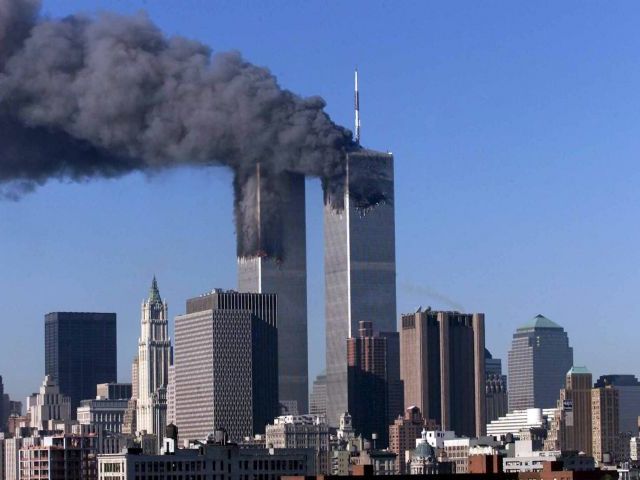
Ataque contra las torres gemelas
DOWNLOAD COURSE
The attack on the World Trade Center on September 11,
2001, traumatized New York City and the nation. Almost
3,000 lives were lost, and more than 30 million square feet of
office space in Lower Manhattan was damaged or destroyed.
The loss of workers, physical capital, and infrastructure reduced
the productive potential of the city’s economy and disrupted
the lives of hundreds of thousands of people. Damage to the
transportation and communications infrastructure depressed
economic activity for a number of months, especially in Lower
Manhattan.

Eng Course- Measuring the Effects of the September 11 Attack on New York City - Download Free PDF


DOWNLOAD COURSE

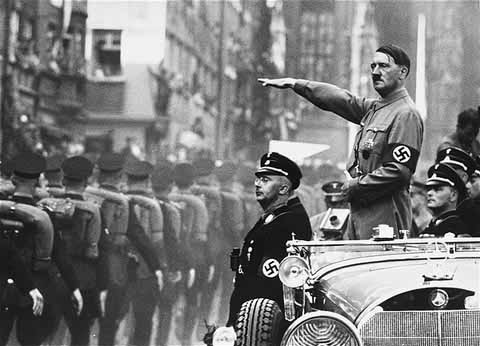
“Adolf Hitler lived from April 20, 1889 to April 30, 1945—almost exactly fifty­six
years. The difference between his first thirty years and the following twenty­six years
seems to be inexplicable.  For thirty years he was an obscure failure; then almost overnight
a local celebrity and eventually the man around whom the whole of world policy
revolved.” (Haffner, p. 1) The biography of Adolf Hitler is unique among the great
political leaders of history. But as a human being, he was always a failure; or at least
strangely incomplete.  As Sebastian Haffner put it: "His life lacked everything that
normally lends weight, warmth and dignity to a human life:  education, occupation, love
and friendship, marriage, parenthood. Apart from politics his was an empty life and
hence one [that] was strangely lightweight, and lightly discarded.” (Haffner, p. 4) What
sort of person was Adolf Hitler? Here is one clue.

Eng Course- Adolfo Hitler (BIOGRAPHY AND CHARACTER)- Download Free PDF


DOWNLOAD COURSE

C O N T E N T S 
Page
STATEMENTS
The Honorable Peter T. King, a Representative in Congress From the State
of New York, and Chairman, Committee on Homeland Security .................... 1
The Honorable Bennie G. Thompson, a Representative in Congress From
the State of Mississippi, and Ranking Member, Committee on Homeland
Security:
Oral Statement ..................................................................................................... 2
Prepared Statement ............................................................................................. 3
The Honorable Laura Richardson, a Representative in Congress From the
State of California:
Prepared Statement ............................................................................................. 4
WITNESSES
Mr. Lee Hamilton, Bipartisan Policy Center:
Oral Statement ..................................................................................................... 5
Prepared Statement ............................................................................................. 8
Ms. Frances F. Townsend, Senior Vice President, Worldwide Government,
Legal and Business Affairs, MacAndrews & Forbes Holdings, Inc. ................. 15
Mr. Peter Bergen, Director, National Security Studies Program, New America
Foundation:
Oral Statement ..................................................................................................... 18
Prepared Statement ............................................................................................. 20
Mr. Evan F. Kohlmann, Flashpoint Global Partners:
Oral Statement ..................................................................................................... 27
Prepared Statement with Laith Alkhouri .......................................................... 30
APPENDIX I
The Honorable Bennie G. Thompson, a Representative in Congress From
the State of Mississippi, and Ranking Member, Committee on Homeland
Security:
Information Submitted for the Record ............................................................... 49
The Honorable Henry Cuellar, a Representative in Congress From the State
of Texas:
Charts ................................................................................................................... 57


Eng Course- THREATS TO THE AMERICAN HOMELAND AFTER KILLING BIN LADEN: AN ASSESSMENT- Download Free PDF


DOWNLOAD COURSE

The German invasion of Poland in 1939 set off World War II. Two
competing alliances, the Axis and the Allies, faced off in Europe,
Africa, and the Pacific. As the map at the right indicates, the early
years of the war favored the Axis powers. Use the map to help
you answer the following questions.
1. Which countries are shown on the map as Axis powers?
2. What gains had the Axis made by 1941?
3. Why would the Battle of Stalingrad have been important?
4. What do the battles shown in Western Europe have in common?
What might that indicate about the course of the war?

Eng Course- World War 2 (Complete History)- Download Free PDF


DOWNLOAD COURSE

Santiago, October 21st., 1980.- The following has been decreed today:
Number 1,150.- Whereas, Provision of decree-laws numbers 1 and 128 of 1973; 527 of 1974; 3464 of
1980; and
Considering,
That the Hon. Government Junta approved a new Political Constitution of the Republic of Chile,
submitting its text to ratification by plebiscite;
That, to this end, the Hon. Government Junta called the entire Nation to a plebiscite for the day of
September 11th, 1980;
That the national sovereign will, expressed by the majority in a free, secret and informed action, was
pronounced approving the proposed Constitution;
That the National Scrutinizing College has remitted the Record of the general scrutiny of the Republic
containing the official and definitive result of the plebiscite and wherein the approval of the new
Constitutional text by a majority of the Chilean people is evident;
With the merit of these facts and invoking the name of the Almighty God

Eng Course- Constitution of the Republic of Chile- Download Free PDF


DOWNLOAD COURSE

Summary 
The largest earthquake ever recorded in Haiti devastated parts of the country, including the
capital, on January 12, 2010. The quake, centered about 15 miles southwest of Port-au-Prince,
had a magnitude of 7.0. A series of strong aftershocks followed. Witnesses are describing the
damage as severe and catastrophic. Communication services were cut off by the earthquake, so
detailed information has been limited. Initial reports indicate that thousands of buildings
collapsed, leaving unknown numbers of people trapped, and tens of thousands of people homeless
in the streets. Early estimates of casualties are constantly being updated, but already reach into
the hundreds of thousands. According to the Secretary-General of the United Nations, “[o]f
Haiti’s 9 million people, initial reports suggest roughly a third may be affected by the disaster.”
About 45,000 U.S. citizens live in Haiti, and the Embassy has been asked to help account for
about 3,000 of them.
Describing conditions in his country as “unimaginable” following the earthquake, President Rene
Preval appealed for international assistance. The country’s top priority was to conduct search and
rescue operations for survivors. Other priorities included an offshore vessel medical unit and
electricity generation capability. The government also requested communications equipment so
that government officials can better function and coordinate response efforts. The Haitian
government, the United Nations, and donor representatives met in Haiti on January 14 to
coordinate their efforts.
The arrival of humanitarian supplies has begun, but access to Port-au-Prince and the distribution
of aid to people in need is difficult and hampered by a number of significant challenges that are
impeding rescue efforts and movement. People are gathering in open spaces and some are
reportedly leaving Port-au-Prince for other areas in Haiti.

Eng Course- Haiti Earthquake: Crisis and Response (History Complete)- Download Free PDF


The School Textbook Division from the Chilean Ministry of Education has carried out experience-sharing
instances and reflection processes oriented to improve the quality of textbooks, adapting them to new
learning strategies, to the demands of the school system as well as to the state-of-the-art in research
in education worldwide.
Since the successful First international Seminar on school textbooks- SITE 2006, the Textbook Division
has decided to keep on with these initiatives that feedback Public Politicies in relation to the provision
of textbooks and the development of academic competences. Along the same lines, the International
Seminar on History and Social Science Textbooks took place in November 2008; forty outstanding Chilean
and foreign experts lectured in conferences and panels full of enthusiastic audiences.
This experience allowed the exchange of studies and researches among those who work in the didactic of
social sciences and/or are involved in the area of history and social sciences textbooks, both nationally and
internationally, and contribute to their quality concerning the didactic design and the treatment of their
contents, considering new approaches in relation to historicity and spatiality of the social phenomena.

DOWNLOAD COURSE

Eng Course- HISTORY AND SOCIAL SCIENCE TEXBOOK- Download Free PDF


When Spain declared war against the United States in April of 1898, Prime
Minister Sagasta justified his decisión by saying: "The government has done no more than
foUow the imperious current of opinión." Similarly Senator Lodge affirmed: "It was this
public sentiment that drove Congress forward to meet the popular will, which members
and Senators very well knew could be fulfiUed by war and in no other way." '
These statements immediately pose problems of grave and permanent historical
importance concerning the relationship between public opinión and political decisions,
the ways and means by which public opinión is formed and makes itself heard, the role
of poUtical leadership in democratic regimes, and the ways in which the ¡dea of popular
pressure is used by politicians and historians alike to explain or justify government
actions.

DOWNLOAD COURSE


Eng Course- THE SPANISH-AMERICAN WAR OF 1898- Download Free PDF


First from the book The Great Pyramid Decoded by Raymond Capt ,1978  
Herodotus informs us that the construction  of the Great Pyramid commenced only when a
sufficient force of skilled masons was available. He wrote, "They worked to the number of one
hundred thousand men at a time, each party three months." It took 20 years labor although some
records add 10 years for cutting stone and preparing the site.
Herodotus continues: "This pyramid was first built in the form of a flight of steps. After the
workmen had completed the pyramid in this form, (probably by means of four ramps, one on each
side increasing in height around the pyramid as the pyramid heightened they raised other stones
(casing stones) by means of machines, made of short beams, from the ground of the first tier of
steps; and after the stone was placed there it was raised to the second tier by another machine; for
there were as many machines as there was tiers of steps; or perhaps the same machine, if it was
easily moved was raised from one tier to the other, as it was required for lifting the stones."
 Herodotus also states that Cheops never used the Great Pyramid as a tomb, but was buried
elsewhere, namely "in a subterranean region on  a island there surrounded by the waters of the
Nile." This is confirmed by the historian Diodorus Siculus who says Cheops was buried "in an
abscure place." An additional archaeological confirmation has recently been discovered in an
inscription on a scarab found by the Egyptologist Abdul Moneim Abu Bakr which speaks of the
"Southern Tomb of Khufu." The Southern Tomb is obviously not a pyramid, which would not
conform to Diodorus' description "an obscure place."

DOWNLOAD COURSE

Eng Course- All about Pyramid of Egypt- Download Free PDF


A History of Chile, 1808–2002, Second Edition
A History of Chile chronicles the nation’s political, social, and economic
evolution from its independence until the early years of the Lagos regime.
Employing primary and secondary materials, it explores the growth of
Chile’s agricultural economy, during which the large landed estates appeared; the nineteenth-century wheat and mining booms; the rise of the
nitrate mines; their replacement by copper mining; and the diversification of the nation’s economic base. This volume also traces Chile’s political
development from oligarchy to democracy, culminating in the election of
Salvador Allende, his overthrow by a military dictatorship, and the return of
popularly elected governments. Additionally, the volume examines Chile’s
social and intellectual history: the process of urbanization, the spread of
education and public health, the diminution of poverty, the creation of a
rich intellectual and literary tradition, the experiences of middle and lower
classes, and the development of Chile’s unique culture.

DOWNLOAD COURSE

Eng Course- All about Chile- Download Free PDF

Ultimos Documentos en PDF