Únete y Recibe Nuestras Publicaciones Por Correo (GRATIS)

Escribe tu dirección de correo:

Verifica en el correo no deseado.

FACEBOOK

Mostrando las entradas con la etiqueta Natural Sciences. Mostrar todas las entradas

DOWNLOAD BOOK

In order to manage the world’s increasingly scarce water resources we must have a sound understanding
of how water moves around the planet and what influences water quality. Fundamentals of Hydrology provides an engaging and comprehensive introduction to this subject and provides real-life examples of water
resource management in a changing world.
The second edition of this popular book brings the text up-to-date with additional case studies and diagrams and a greater synthesis of water quality with physical hydrology. The chapters on runoff and
evaporation have been updated and the final chapter on hydrology in a changing world has more material
on water resource management strategies. Additionally the chapter on streamflow analysis now includes a
more in-depth section on modelling runoff. The book begins with a comprehensive coverage of precipitation,
evaporation, water stored in the ground and as snow and ice, and runoff. These physical hydrological processes show with respect to the fundamental knowledge about the process, its measurement and estimation and how it ties in with water quality. Following this is a section on analysing streamflow data, including using computer models and combining hydrology and ecology for in-stream flow assessment. A chapter on water quality shows how to measure and estimate it in a variable environment and finishes with a section on pollution treatment. The final chapter brings the text together to discuss water resource management and real-life issues that are faced by hydrologists in a constantly changing world.
Fundamentals of Hydrologyis a lively and accessible introduction to the study of hydrology at university
level. This new edition continues to provide an understanding of hydrological processes, knowledge of the
techniques used to assess water resources and an up-to-date overview of water resource management in a
changing world. Throughout the text, wide-ranging examples and case studies are used to clearly explain
ideas and methods. Short chapter summaries, essay questions, guides to further reading and a glossary are
also included.


Eng Book- Fundamentals of Hidrology- Download Free PDF


DOWNLOAD BOOK

INDEX
1. VIDEO AND LISTENING
2. WORDS AND EXPRESSIONS
3. READING
4. WRITING
5. TRANSCRIPT
6. TEACHER NOTES AND ANSWERS

Eng Book- Bermuda Triangle Mistery- Download Free PDF


DOWNLOAD BOOK
Chemical reactions are the heart of chemistry. Some reactions, such as those
accompanying a forest fire or the explosion of dynamite, are quite dramatic.
Others are much less obvious, although all chemical reactions must involve
detectable change. A chemical reaction involves a change from reactant substances
to product substances, and the product substances will have physical and chemical properties different from those of the reactants.
Figure 4.1 shows an experimenter adding a colorless solution of potassium
iodide, KI, to a colorless solution of lead(II) nitrate, Pb(NO3)
. What you see is the formation of a cloud of bright yellow crystals where the two solutions have come into
contact, clear evidence of a chemical reaction. The bright yellow crystals are lead(II)
iodide, PbI2
, one of the reaction products. We call a solid that forms during a chemical reaction in solution a precipitate; the reaction is a precipitation reaction.
In this chapter, we will discuss the major types of chemical reactions, including
precipitation reactions. Some of the most important reactions we will describe involve
ions in aqueous (water) solution.Therefore, we will first look at these ions and see how
we represent by chemical equations the reactions involving ions in aqueous solution.
Some questions we will answer are: What is the evidence for ions in solution?
How do we write chemical equations for reactions involving ions? How can we classify and describe the many reactions we observe so that we can begin to understand
them? What is the quantitative description of solutions and reactions in solution?

Eng Book- Chemical Reactions- Download Free PDF


DOWNLOAD BOOK

Contents
Ecology & Conservation | 1
Evolution | 8
Organismal Biology | 9
Geology | 10
Studies in Avian Biology | 11
Natural History | 15
California Natural
History Guides | 18
Anthropology &
Paleontology | 21
Species & Systematics
Series | 24
Journals | 25

Eng Book- Natural Sciences- Download Free PDF


DOWNLOAD BOOK

Soil pollution is defined as the build-up in soils of persistent toxic compounds, chemicals, salts,
radioactive materials, or disease causing agents, which have adverse effects on plant growth and animal
health.
Soil is the thin layer of organic and inorganic materials that covers the Earth's rocky surface.
The organic portion, which is derived from the decayed remains of plants and animals, is concentrated
in the dark uppermost topsoil. The inorganic portion made up of rock fragments, was formed over
thousands of years by physical and chemical weathering of bedrock. Productive soils are necessary for
agriculture to supply the world with sufficient food.

Eng Book- Soil Pollution- Download Free PDF


DOWNLOAD BOOK

HISTORICAL ECOLOGY IS a powerful perspective for understanding the complex
historical relationship between human beings and the biosphere. The present
volume proceeds from the axiom that humanity in its historic paths across
earth has interceded in material and measurable ways in a biotic world that
evolved previously by natural selection and other evolutionary forces, and that
the changes thus imposed on nature have in turn been reflected in human
 cultures, societies, and languages through time. In effect, historical ecology
encompasses the view that wherever humans have trodden, the natural
environment is somehow different, sometimes in barely perceptible ways, sometimes
in dramatic ways. The authors in this volume have been trained in various disciplines,
 including anthropology (especially the subdisciplines of archaeology
and sociocultural anthropology), geography, plant genetics, integrative biology,
and general ecology, and they recognize the interdependence of these fields in
attempting to comprehend the effects and countereffects of human behavior in
the lowlands of the New World Tropics (Neotropics). The Neotropics are the
torrid zone of the New World, and the lowlands within them are tropical in
 climate, moist, usually heavily forested, and at altitudes below approximately
500 meters. As shown in this volume’s case studies, the neotropical lowlands
exhibit classic anthropogenic or cultural landscapes formed over thousands of
years.

Eng Book- TIME AND COMPLEXITY IN HISTORICAL ECOLOGY- Download Free PDF


DOWNLOAD BOOK

Food allergies, defined as an immune response to food proteins, affect as many as 8% of young children and
2% of adults in westernized countries, and their prevalence appears to be rising like all allergic diseases. In addition to well-recognized urticaria and anaphylaxis triggered by IgE antibody-mediated immune responses,
there is an increasing recognition of cell-mediated disorders such as eosinophilic esophagitis and food proteininduced enterocolitis. New knowledge is being developed on the pathogenesis of both IgE and non-IgE mediated disease. Currently, management of food allergies consists of educating the patient to avoid ingesting the responsible allergen and initiating therapy if ingestion occurs. However, novel strategies are being studied, including sublingual oral immunotherapy and others with a hope for future.

Eng Book- Food Allergy: Review, Classification and Diagnosis- Download Free PDF


DOWNLOAD BOOK

Most of the cells in the human body are not in direct contact with the external environment, so rely
on the circulatory system to act as a transport service for them. Two fluids move through the
circulatory system: blood and lymph. The blood, heart, and blood vessels form the
Cardiovascular System. The lymph, lymph nodes and lymph vessels form the Lymphatic
System. The Cardiovascular System and the Lymphatic System collectively make up the
Circulatory System.


Eng Book- THE CIRCULATORY SYSTEM - Download Free PDF


DESCARGAR LIBRO
El tiburón martillo es uno de los animales acuáticos mas fantásticos
que se encuentran en el océano. Aunque es un animal peligroso
para los buceadores o nadadores en sus zonas, el ser humano
se esta encargando de eliminar esta especie por completo convirtiéndose
el hombre el verdadero depredador.


ES Libro- Tiburón Martillo (Animal Acuático)- Descargar Gratis PDF


DOWNLOAD BOOK

ABSTRACT: We provide pilot data from a satellite-tracked great hammerhead shark Sphyrna mokarran in the Atlantic, representing the first such data on this species in the literature. The 250 cm shark
was tagged off the coast of the middle-Florida Keys (USA) and transmitted for 62 d. During this time
it migrated a minimum distance of ~1200 km northeast from the coast of Florida, into pelagic international waters of the Northwest Atlantic. When compared to the primary literature, this migration represented a northeasterly range extension for this species off the continental slope in the Atlantic. The
significance of this range extension is discussed in terms of the vulnerability of S. mokarran to target
and non-target fisheries.

Eng Book- Range extension of the Endangered great hammerhead shark Sphyrna mokarran in the Northwest Atlantic- Download Free PDF


DOWNLOAD BOOK

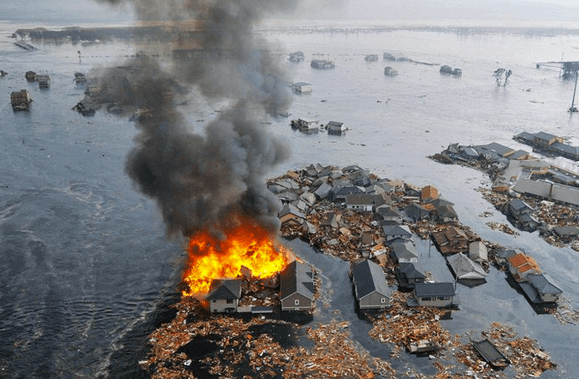
To our generous supporters, saying ‘thank you’ never seems like
enough. One year ago, millions of people across the globe stared at
their televisions, horrified by the destruction wrought by the
massive earthquake and tsunami that struck Japan. At that
moment, it was difficult to see beyond the immediate need for
shelter, food, medical care and search and rescue operations to find
those still missing. With support from donors like you, one year
later, Japan is firmly on the path to recovery.

Eng Book- JAPAN EARTHQUAKE AND TSUNAMI- Download Free PDF


DOWNLOAD BOOK

Livestock and horses can be injured or poisoned by many plants that grow in a pasture setting. In
productive pastures, livestock will usually eat only the grasses and legumes to which they are accustomed, but when pastures are overgrazed, animals often consume poisonous plants they would not eat if
given a choice.
There is no grazing season entirely free of toxic plants. Early spring pastures may need special attention
because of lack of desirable grasses and legumes. Some poisonous plantsare a temporary threat to
animals because they represent a disproportionately high percentage of the pasture in early spring. Often,
during dry, mid-summer months there is a lack of forage growth, so livestock will turn to the remaining
green plants, including toxic weeds and cultivated plants. Some weeds are more toxic as a result of midsummer drought, killing frosts in the fall, or physical damage to the plants during the course of the
growing season.
Good pasture management is one of the most important steps in preventing animal suffering or loss from
toxic plants. Keeping the desirable forage species productive throughout the grazing season reduces the
possibility of animals grazing on poisonous plants.
Most poisonous weeds and cultivated plants can be controlled. It may be practical to simply fence off
infested areas so that animals do not have access to particularly hazardous weeds. An alternative method
of controlling poisonous weeds is to spray them with approved herbicides. Another alternative is to
physically or mechanically remove the problem plants.
The following tables list some of the plants that can cause sickness and sometimes death to grazing
livestock and horses. If you suspect an animal has eaten something poisonous, it is important to call your
veterinarian immediately.
Keep telephone numbers for your veterinarian and the National Animal Poison Control Center
(1-888-426-4435) in a convenient location. A service of the American Society for the Prevention of
Cruelty to Animals, the hotline is staffed 24 hours a day, every day, by veterinary toxicologists.
Because the center receives no government or private funding, there is a $45 charge per case, though, at
no extra charge, the Center will do as many follow-up calls as necessary in critical cases, and at the
owner's request will contact their veterinarian directly. The Center also provides, by fax, specific treatment protocols and current literature citations when needed.

Eng Book- Poisonous Plants in Pastures- Download Free PDF


DOWNLOAD BOOK

Moderate to severe drought conditions are a fact of life in more than half the nation,
according to the U.S. Geological Survey. Many areas face serious regional water shortages
because water is being used faster than it can be replenished naturally. Some utilities, and
local and state governments have declared mandatory water conservation measures, even
for private well owners.
Water conservation can help well owners secure their drinking water supply, save money
and protect the environment. Don’t wait until a prolonged drought creates a water emergency. Consider measures today to preserve your water supply far into the future.

Eng Book- Water Conservation- Download Free PDF


DOWNLOAD BOOK

Many people confuse spiders with insects. The easy way to recognize the spider from an
insect is that spider has 4 pairs of legs and an insect has 3 pairs. One major difference is that
insects have compound eyes whereas the spider has singular eyes with lenses. Unlike insects,
spiders do not have antennas.

Eng Book- Spiders Guide- Download Free PDF


DOWNLOAD BOOK

TABLE OF CONTENTS 
Introduction
Table of Contents i
1 Purpose 1
2 Explanation of Changes 1
3 Filing Instruction 1
4 Maintenance of Manual 1
5 Agency Supplementation 2
I Prevention, Control, and Abatement of Air, Water, and Other Pollution 3
 Concerning Federal Facilities, Administered Lands, and Activities
1 Purpose 3
2 Scope 3
3 Authorities 3
4 Objectives 5
5 Policy 6
6 Definitions 7
7 Responsibilities 7
8 Compliance with Other Environmental Statutes 18
II Environmental Compliance and Management Training 19
1 Purpose 19
 2 Objective 19
3 Policy 20
4 Responsibilities 21
5 Requirements 22
III Clean Water Program 24
1 Purpose 24
2 Scope 24
3 Authorities 24
4 Objectives 24
5 Policy 24 ii
IV Safe Drinking Water Program 27
1 Purpose 27
2 Scope 27
3 Authorities 27
4 Objective 27
5 Policy 27
6 Definitions 30
7 Responsibilities 30
V Comprehensive Environmental Response, Compensation, and Liability Act 31
Program
1 Purpose 31
 2 Scope 31
3 Authorities 31
 4 Policy 31
VI Solid and Hazardous Waste Management Program 34
1 Purpose 34
2 Scope 34
3 Authorities 34
4 Objective 34
5 Policy 35
VII Pesticides and Toxic Substances Management Program 37
1 Purpose 37
2 Scope 37
3 Authorities 37
4 Objective 37
5 Policy 38
VIII Clean Air Program 40
1 Purpose 40
2 Scope 40
3 Authorities 40
4 Objectives 40
5 Policy 40
6 Responsibilities 42 iii
IX Environmental Management Systems Program 44
1 Purpose 44
2 Scope 44
3 Authorities 44
4 Objectives 45
5 Policy 45
6 Definitions 46
7 Responsibilities 47
X Oil Pollution Program 51
1 Purpose 51
2 Scope 51
3 Authorities 51
4 Objectives 51
5 Policy 51
XI Planning, Budget Preparation, Program Management, and Accomplishment 53
Reporting
1 Purpose 53
2 Scope 53
3 Objectives 53
4 Definitions and Acronyms 53
5 Responsibilities 55
6 Budget-Cycle Schedule of HMMP Planning and Reporting 55
7 Procedures 59
XII Emergency Oil Discharge and Hazardous Substances Release Response Program 63
1 Purpose 63
2 Scope 63
3 Objectives 63
4 Policy 63
5 Responsibilities 64
6 Reporting 65
7 Technical and Logistical Assistance 66 iv
XIII Low-level Radioactive/Mixed Waste Management 67
and Burial Site Cleanup Program
1 Purpose 67
2 Scope 67
3 Authorities 67
4 Objectives 68
5 Policy 68
6 Definitions 68
7 Responsibilities 68
XIV Environmental Compliance For Real Property Acquisition or Disposal 70
1 Purpose 70
2 Scope 70
3 Authorities 70
4 Objectives 70
5 Policy 71
6 Definitions 72
7 Responsibilities 73
Appendix A: Glossary of Terms A-1
Appendix B: List of Acronyms B-1

Eng Course- Environmental Pollution Prevention, Control, and Abatement Manual- Download Free PDF


DOWNLOAD BOOK

Nantes Métropole does not
have a history of measuring
noise levels across its territory.
There is however mapping and
regulatory assessment.
As far as tackling noise in France
is concerned, the State may
legislate, but it is mayors who
have the day-to-day responsibility for tackling neighbourhood
noise under their policing powers,
even if new urban communities
such as Nantes Métropole
have powers to 'tackle noise
nuisance'. It is on this basis
that Nantes Métropole has implemented European Directive
2002/49/EC. In order to be
effective, an active policy on
the sound environment must
include all institutional players
and citizens.
Traffi c is the predominant source
of this noise and chiefl y affects
the territory of Nantes : of the
16 % of inhabitants exposed
to a level L den > 65 dBA over
24 hours, 77 % live in Nantes,
and of the 4 % of inhabitants
exposed at night-time to a level
Ln > 60 dBA, 98 % are from
Nantes.
The list of sensitive buildings
(schools, hospitals, etc.) exposed to an Lden > 60 dBA
indicates that 68 % are located
within City of Nantes. With regard
to rail noise (trains, trams), under
1 % of the population is exposed
to an Lden > 60 dBA, but 88 %
of those are from Nantes.


Eng Book- NOISE POLLUTION- Download Free PDF


DOWNLOAD COURSE

Why talk about tornadoes?
Tornadoes have been reported in every state, and though they generally
occur during spring and summer, they can happen any time of the year.
While tornadoes can occur at any time of the day or night, they are most
likely to occur between 3:00 and 9:00 p.m. There are no areas immune
to tornadoes; they have been reported in mountains and valleys, over
deserts and swamps, from the Gulf Coast into Canada, in Hawaii and even
Alaska. Regardless of the location or time of year, if conditions are right,
a tornado can happen. Over 1,000 tornadoes are reported annually nationwide, and as our tornado detection systems improve, more are being
reported each year. However, sometimes tornadoes will develop in areas
in which no tornado watch or warning is in effect, so stay alert for
changing weather conditions.

Eng Course- All About Tornadoes- Download Free PDF


DOWNLOAD COURSE

This book is the second edition of NASA SP-179, first printed in 1982. It has
been updated to take into account planetary missions that have flown
throughout the solar system since the first edition. Both editions are outgrowths of various short courses in Planetary Geology that have been held
over the last two decades, and from activities developed in the classroom.
Activities in Planetary Geology was developed for the National Aeronautics
and Space Administration with the guidance, support, and cooperation of
many individuals and groups.

Eng Course- Planetary Geology (A Teacher’s Guide with Activities in Physical and Earth Sciences)- Download Free PDF


DOWNLOAD COURSE

INTRODUCTION
Needham (1903: 739) established the family-group
taxon Petalurinae as a subfamily within the Aesh­
nidae, together with the fossil Stenophlebinae and
Aeschnidiinae and the extant Gomphinae, Aeshni­
nae, Cordulegastrinae and Chlorogomphinae. This
classification was also used in the famous work of
Tillyard (1917). The petalurids were lifted to family
rank as Petaluridae by Till yard (1926) and even given
the rank of a separate superfamily Petaluroidea by
Carle ( 1982) and Pfau (1991). An alpha-taxonomic
revision of extant Petaluridae is in progress by An­
dress (in prep) and by Car le (in prep.).
The alleged fossil Petaluridae represent a 'myth'
because almost all the taxa that have been proposed
to belong to this taxon are in fact unrelated to extant
Petaluridae or at least of very uncertain position (Nel
and Paicheler 1 992; Carpenter in Rowe 1 987: 1 19;
Carle 1 995; Bechly 1 995, 1 996).
Alleged Tertiary petalurids: Needham (1903)
maintained that 'the Petal urinae are well represented
among the Tertiary fossils of Europe', although no
Tertiary dragonfly fossil had been assigned to the
Petaluridae or their stem-group, with the sole excep­
tion of Petalura acutipennis Hagen 1 859 ( = Petalura ?
ovatipennis Hagen 1 859, which is a nomen nudum ac­
cording to Nel and Paicheler 1 992). The latter fossil
has been proposed to be a Cordulegastridae incertae
sedis by Nel and Paicheler ( 1992), but more probably
represents a Gomphides - Lindeniinae, as already
presumed by Handlirsch ( 1908: 899). More recently
Zhang (1989: 29-31 ,414, text-fig. 1 0- 1 3, pi. 3, fig. 1) de­
scribed the new fossil genus Miopetalura from the
Miocene of Shanwang (Shandong Province, China)
with the two species M. shanwangica and M. oriental­
is, not mentioned by Nel and Paicheler ( 1992) since
they did not know of this publication. We have now
the opportunity to discuss the phylogenetic position
of these fossils, that were assigned to Petaluridae by
Zhang ( 1989). Since we came to the conclusion that
they are no petalurids either, there seems to be no
Tertiary fossil record for Petalurida at all.

Eng Course- PALEONTOLOGIA LOMBARDA Guide- Download Free PDF


DOWNLOAD COURSE

Throughout history, envenoming by animal toxins
has fascinated humans. Rarely has a medical
phenomenon had so much religious association,
symbolism, anecdotal communication, and provoked
so much violent professional disagreement. Animal
toxins have made a significant contribution to
enhancing knowledge in human physiology and
pharmacology. Information on the nature and mechanism
 of action of these toxins has enabled a more
scientific approach to the treatment of their intoxications.
 Early and specific therapy is frequently
required after envenoming and often includes life
support and maintenance of vital functions by
mechanical ventilation, i.v. fluid and drug therapy.
The total number of snake bites throughout the
world has been estimated at 500000 per year, with
approximately 40000 deaths [5,60,81]. The majority
of these incidents occur in Asia, South America
and Africa. Snake bite is the fifth most common
cause of all deaths in Burma [6], and in Sri Lanka,
two people die each day of snake bite [21]. In the
USA, 45000 snake bites occur each year of which
7000-8000 are venomous and there are between 10
and 15 deaths [13]. In the UK several incidents of
bites inflicted by foreign venomous snakes have been
recorded [67] and although there have been 11
deaths caused by adder bites from 1876 to 1941, in
recent years there have been no deaths from snake
bites. The British Military Hospital, Dharan, Nepal,
managed 58 cases of snake bite in 1989 [35]. Eighteen
deaths attributed to snake bite were reported in
Australia from 1981 to 1991 [79]. In Sweden, 44
deaths were reported from snake bite from 1911 to
1978, while in Finland and Sweden there are 200
bites annually. Bee and wasp stings caused 61 deaths
in the UK during a 13-yr period ending in 1972,
while in the USA, hymenoptera stings cause 40-50
deaths annually [74]. At present, an average of five
deaths occur from bee and wasp stings in the UK
annually [61]. Scorpion stings are responsible for
1000-2000 deaths each year in Mexico, and high
mortalities are also encountered in Brazil, Israel,
Trinidad, Algeria, India [85] and Jordan [37]. A total
of 38068 cases of envenoming by scorpion stings
during 1981-1986 were treated in the city of Leon,
(Br. J. Anaesth. 1995; 74: 319-327)
Mexico [20]. Spider bites are associated with a
mortality of 1-17% in Chile, Brazil [50], the
Mediterranean region [85], Israel, North Africa and
in some regions in the former Soviet Union [45].
Black widow spiders caused 63 deaths in the USA
from 1950 to 1959 while the funnel-web spider is
responsible for some morbidity in Australia. Tick
bites cause poisoning and sometimes death in
Australia and western North America. Puffer fish
poisoning is responsible for 250 cases of poisoning a
year in Japan with a 50-60% mortality rate.
Ciguatera is the most commonly reported foodborne
intoxication of marine origin in the United
States, accounting for 7.4% of all food-borne
outbreaks from 1978 to 1982 [73]. It is a public
health hazard in the Pacific and Caribbean islands.
In 1968 an outbreak of paralytic shell fish poisoning
occurred in the north east coast of England affecting
78 people [55]. Scuba diving and similar recreational
activity has been associated with poisoning caused
by marine animals, particularly in the Indian and
Pacific oceans.
Figure 1 shows the principal sites of action of the
animal toxins discussed.

Eng Course- Animal toxins- Download Free PDF

Ultimos Documentos en PDF